


Knights & Dragons Action RPG
4.166.11K Reviews
App Specs
- Version
- 1.74.1
- Updated On
- License
- Free
- Downloads
- 10,000,000+
- Developer
- Deca_Games
- Categories
- Action
- Platform
- Android
Screenshots
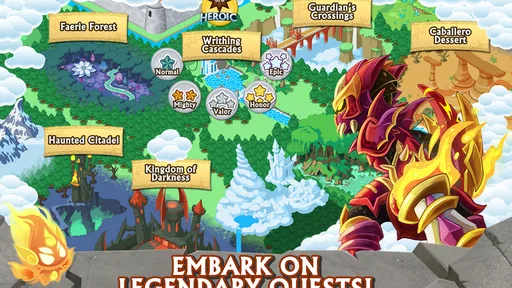
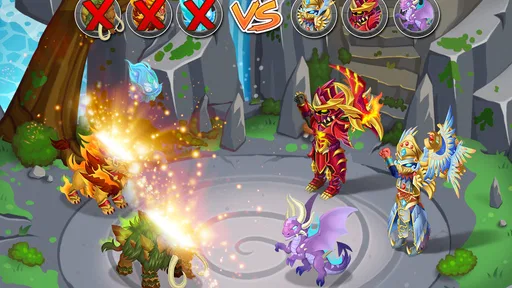
 Analysis by AppCompare
My first piece of advice for Knights & Dragons is to treat it as a game of small, repeatable decisions rather than a race to collect everything at once. I get the most out of its action-RPG loop when I pick a clear goal for a session—make progress through a fight, improve a piece of gear, or work toward a boss—then stop before the routine starts to feel like chores. That approach suits a mobile game you can return to in short bursts, while still leaving room to get absorbed in a longer run when I have time.
A practical rhythm for each play session
When I open a game built around knights, equipment, and battles, I want to know what I’m working toward before spending resources. I’d begin by checking the current challenge and my available gear, then focus on one useful upgrade instead of scattering effort across every item. This is a sensible habit in Knights & Dragons because the appeal is partly in building a stronger lineup over time, not simply tapping through encounters as quickly as possible.
A realistic daily session might happen during a commute break or while waiting for an appointment. I could take on a manageable stretch of play, note which materials or equipment would help next, and leave a more demanding boss attempt for a moment when I can pay attention. That division matters: an ordinary fight can fit into a brief gap, but a difficult encounter is more enjoyable when I’m not being interrupted or rushing through decisions.
For new players, I’d avoid treating every reward as an instruction to upgrade immediately. First compare what you already use with what you have just collected. If a new piece looks appealing but does not support the way you have been building your knight, keeping resources in reserve can be more useful than making a quick change. The satisfaction comes from seeing a plan develop, not from changing equipment every time something drops.
Settings and choices that affect comfort
I like to make a quick settings check before settling into a longer session. On a phone, screen brightness and sound level can matter more than they do at home, especially if I’m playing in a shared space or somewhere noisy. The game’s fantasy soundtrack and battle effects are part of its atmosphere, but I would not keep the volume high just to hear every cue when a lower level—or playing silently—is more comfortable.
It is also worth checking the device’s available storage and keeping the game updated. The current version is 1.74.1, and it runs on Android 5.0 or later. Those details are useful if I’m deciding whether an older phone can run it, although a compatible operating system alone does not promise that every device will feel equally smooth. I would leave enough room for updates rather than waiting until the phone is nearly full.
The game is free to start, with in-app purchases ranging from $0.99 to $199.99 per item. That broad range is a good reason to decide on a personal spending limit before browsing optional purchases, not after a tempting offer appears. I can enjoy a collection-focused game without turning every pause into a purchase decision; if spending pressure spoils the fun, I would rather take a break than chase an upgrade with money.
Worth Reading Before You Choose

EA SPORTS FC Mobile 26 Is a Bigger Football Game, but It Takes Time

Flipboard Shows What News Apps Must Do Beyond the Feed

Switching to Android Auto Means Rethinking Your Driving Routine

Google Calendar Makes a Crowded Week Easier to Manage

Ludo King Makes the Most of the Minutes Between Plans

Baby Panda World Brings Quick Play to Modern Phones, but Its Game Library Feels Busy
Making progress without turning it into a grind
One useful habit is to give each session a stopping point. I might aim to finish a particular encounter or make one meaningful improvement, then call it there. This keeps the game from swallowing a whole evening just because there is always another piece of gear to inspect. The collecting loop works best for me when progress feels deliberate; it becomes tiring if I treat every unclaimed reward or unfinished task as an urgent obligation.
Bosses are a good place to slow down and think. Rather than repeatedly charging into a fight because I want a quick win, I would look at whether my current equipment and approach seem ready, then make a targeted adjustment before trying again. The trade-off is straightforward: patience can make a tough encounter feel earned, but a player who wants immediate, effortless victories may find this rhythm frustrating.
Guild play also changes the feel of a session. If I enjoy shared goals, joining a guild can give me a reason to return and coordinate with other players. If I prefer a completely solitary game, I can focus on the individual progression instead, but I should not expect the social side to be the main attraction for me. A guild is most worthwhile when I actually want the group element, rather than joining only because it sounds like a mandatory shortcut.
Who will enjoy this particular RPG
I’d recommend it to players who like steadily improving a fantasy fighter, comparing equipment, and preparing for bosses rather than relying on reflexes alone. The combination of collecting and combat gives small goals a clear payoff: a better loadout can make the next challenge feel more manageable. It is especially appealing if you enjoy returning to the same character-building loop over multiple short sessions.
On the other hand, I would point a player toward a different action game if they mainly want fast, direct combat with little inventory management or long-term collection. I would also skip it if optional purchases create anxiety, or if I’m looking for a tightly paced story that carries every session forward. Its strengths are in repeated battles and gradual development, so those who dislike that structure may experience the core loop as repetition rather than mastery.
Compared with action games that emphasize quick reflexes, this one gives more weight to preparation and what I have collected. Compared with a traditional, story-led RPG, it is easier to approach in short bursts, but the ongoing pursuit of stronger gear can take center stage. That makes it a useful middle ground for someone who wants fantasy progression on a phone without committing every session to a long narrative chapter.
Immersive Gameplay
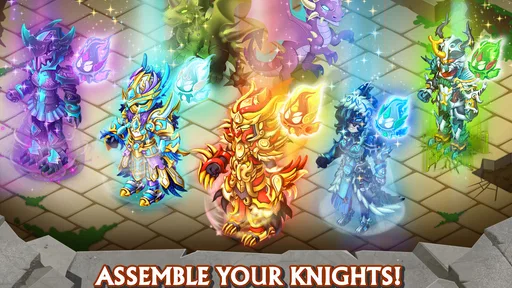
Jumping into Knights & Dragons feels like stepping into a world where magic and might rule. The game kicks off by letting you build your own kingdom from scratch. As you progress, you’re tasked with recruiting knights to form a squad capable of taking on the darkest creatures imaginable. It’s all about strategy here, folks! You’ll need to balance your resources, upgrade your armor, and plan your battles to perfection.
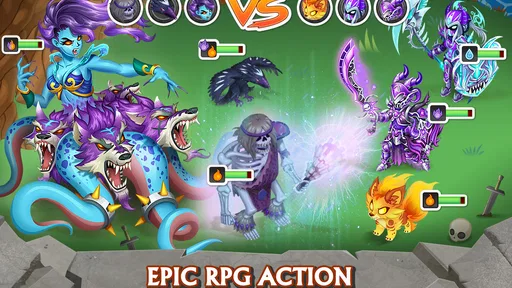
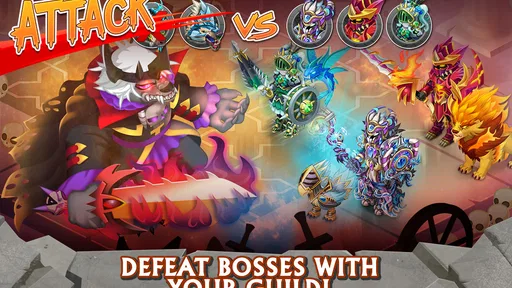
One of the standout features for me is the epic boss battles. These encounters are no walk in the park, requiring you to deploy your strongest knights and the best tactics. But don’t worry, the thrill of taking down a massive beast is well worth the effort.
Collect and Conquer
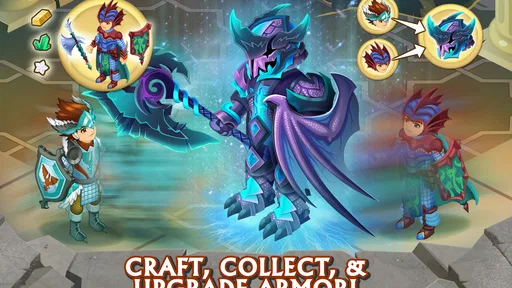
If you’re a fan of collectible games, you’ll love the armor and knight customization options. You can mix and match armor pieces to create the ultimate warrior. Plus, the game offers a crafting system that lets you forge powerful gear from materials collected during your adventures. It’s super satisfying to see your knights decked out in shiny new armor, ready to face whatever the game throws at them.
And let’s not forget the guild system. Joining a guild lets you team up with other players to tackle challenges together. It’s a fantastic way to meet new friends and earn some sweet rewards in the process.
Visuals and Soundtrack
Visually, the game doesn’t disappoint. The art style is vibrant and colorful, bringing the fantasy world to life. Each area you explore is beautifully designed, and the character animations are smooth, making the battles feel dynamic and engaging.
The soundtrack is another highlight, featuring a mix of epic and atmospheric tunes that perfectly complement the game’s setting. It’s the kind of music that gets you pumped up for battle, adding an extra layer of excitement to every encounter.
Challenges and Events
The game keeps things fresh with regular events and challenges. These events offer unique rewards and often require you to adapt your strategy to succeed. It’s a great way to keep players engaged and ensure there’s always something new to tackle.
One thing I appreciate is the game’s pacing. It doesn’t rush you, allowing you to enjoy your journey and explore all the game has to offer. Whether you’re a casual player or a hardcore gamer, there’s something here for everyone.
Final Thoughts
In conclusion, Knights & Dragons is a must-try for any RPG enthusiast. It’s a game that combines a rich world, strategic depth, and endless customization into a package that’s hard to put down. Whether you’re battling epic bosses or crafting the perfect set of armor, you’ll find plenty to keep you entertained.
So, what are you waiting for? Suit up, rally your knights, and dive into the world of Knights & Dragons. Adventure awaits!
A long-running game with a clear audience
Deca_Games develops this action RPG, which has been available since June 17, 2013. Its staying power is reflected in an average rating of 4.1 from around 442,000 ratings, with about 66,000 written reviews and over 10 million installs. Those figures suggest a sizeable player base, though they don’t guarantee that its particular mix of collection, combat, and progression will suit everyone.
The Teen age rating is another practical point for families choosing a game. I’d still take a look at the experience myself before handing it to a younger player, especially because the game includes optional purchases. A free download makes it easy to try, but it does not mean every part of the experience is free of spending prompts or that purchases are necessary for every player.
How I’d approach events and collection goals
Events can make a familiar routine feel different, but I would treat their rewards as opportunities rather than deadlines. If a challenge asks me to change how I use my knights or equipment, I’d first decide whether the reward fits my longer-term plan. Chasing every limited objective can turn a relaxed game into a checklist; choosing only the event goals that genuinely interest me keeps the experience more manageable.
A useful collection habit is to compare new armor with the role it will serve before crafting or replacing anything. Materials have value because they let me shape a loadout, so spending them just because I can may leave me short when a more useful upgrade becomes available. I’d keep a simple mental priority—prepare for a boss, improve a frequently used knight, or explore a new event—and let that guide the next decision.
There is also a real trade-off between customization and convenience. Trying different armor combinations can be satisfying, but inspecting every item in detail takes time. When I’m playing casually, I’d make a few considered choices and move on; when I’m preparing for a harder fight, that extra comparison is worthwhile. This keeps equipment management tied to a purpose instead of becoming the whole session.
What to expect from the social and combat sides
The guild system is most valuable for someone who likes having other players as part of the routine. It can turn a solo collection game into a shared activity, but social play also means that my interest in returning may depend partly on whether I enjoy the group. I’d join because I want that connection and cooperative challenge, not because I assume guild membership will remove the need to build my own knights and gear.
Combat has a different appeal from an action game where success depends mainly on quick inputs. Here, the preparation—choosing equipment, improving a lineup, and deciding when to take on a boss—has a substantial role in how ready I feel. That makes victories satisfying for players who like planning. If I want a game that is all immediate movement and reaction, a more reflex-focused action title would be a better fit.
The game’s events and boss encounters offer reasons to revisit the same core systems, but they do not change the fact that collecting and upgrading are central. I would expect repetition as part of the format. The question is whether I enjoy gradually shaping a roster; if that loop feels rewarding, repetition becomes a comfortable routine, while players who need a new mechanic or story development in every session may lose interest.
My verdict after weighing the routine
Knights & Dragons is at its best when I want a fantasy game that can be played in manageable sessions but still gives me long-term goals to think about. The most satisfying route is not to chase every reward or buy every tempting upgrade; it is to choose a target, make a focused improvement, and return when I feel like taking on the next challenge. That small amount of self-direction helps keep the collection loop enjoyable.
I’d suggest giving it a try if you like gear decisions, boss preparation, and the option of guild play, particularly if you’re comfortable with a game whose progress comes in stages. I’d steer away if you want a purely story-driven adventure, dislike repeated progression, or prefer to avoid games with optional in-app purchases altogether. For the right player, its combination of collecting and battles can make a spare ten minutes feel purposeful; for everyone else, a more direct action game may be the better choice.
Pros
- Engaging storyline keeps players invested.
- Unique armor crafting system.
- Frequent updates with new events.
- Smooth graphics and animations.
- Variety of monsters to battle.
Cons
- In-app purchases can be pricey.
- Requires constant internet connection.
- Energy system limits playtime.
- Repetitive gameplay in later stages.
- Occasional lag on older devices.
FAQs for Knights & Dragons Action RPG
What is the main objective of Knights & Dragons Action RPG?
Knights & Dragons is an engaging action RPG where players build and lead a team of knights in an epic quest to defeat monstrous foes and powerful dragons. The primary objective is to collect and upgrade armor, participate in battles, and complete quests to advance through the game's storyline while competing in events for rewards.
How does the combat system work in Knights & Dragons?
The combat system in Knights & Dragons is turn-based, allowing players to strategically select actions for their knights during battles. Players can choose from a variety of attacks and abilities, and timing is crucial for executing special moves. Understanding enemy weaknesses and using the right armor sets can greatly influence the outcome of battles.
Are there multiplayer features in Knights & Dragons?
Yes, Knights & Dragons offers multiplayer features, including the ability to join or create guilds. Players can collaborate with guild members in battles and compete against other guilds in global events. This cooperative element enhances the gameplay experience by fostering teamwork and strategic planning among players.
What in-app purchases are available in Knights & Dragons?
Knights & Dragons offers a range of in-app purchases that enhance gameplay. Players can buy gems, the premium currency, to quickly acquire armor, energy, and other resources. While these purchases can accelerate progress, they are not essential, as the game is designed to be enjoyable and rewarding for free-to-play users as well.
Is Knights & Dragons suitable for all ages?
Knights & Dragons is rated for players aged 10 and above due to its fantasy violence and thematic elements. The game includes battles against mythical creatures and dragons, but it is presented in a stylized and non-realistic manner. Parents may wish to review the game to ensure it aligns with their family’s values and expectations.


